
Planaria and sowbugs ruled the creek this month at our October 17 fall macroinvertebrate monitoring session. Planaria, a bilaterian flatworm known for its extraordinary ability to regenerate missing body parts from tiny fragments, made up 34% of the critters we netted, and sow bugs, a little isopod crustacean, accounted for 26%. New for this session was a small flat leech. We have found its cousin, the cylindrical leech, but never this tiny jawless leech. Unfortunately, while we found 11 different species living in the Little Falls Branch, this wasn’t enough to move the creek out of the poor rating as most of the organisms we found are very pollution tolerant.
The number and diversity of macroinvertebrates living in a creek are a very good indicator of the biological health of the creek as some species are more pollution tolerant than others. Learn more about our stream monitoring program HERE.
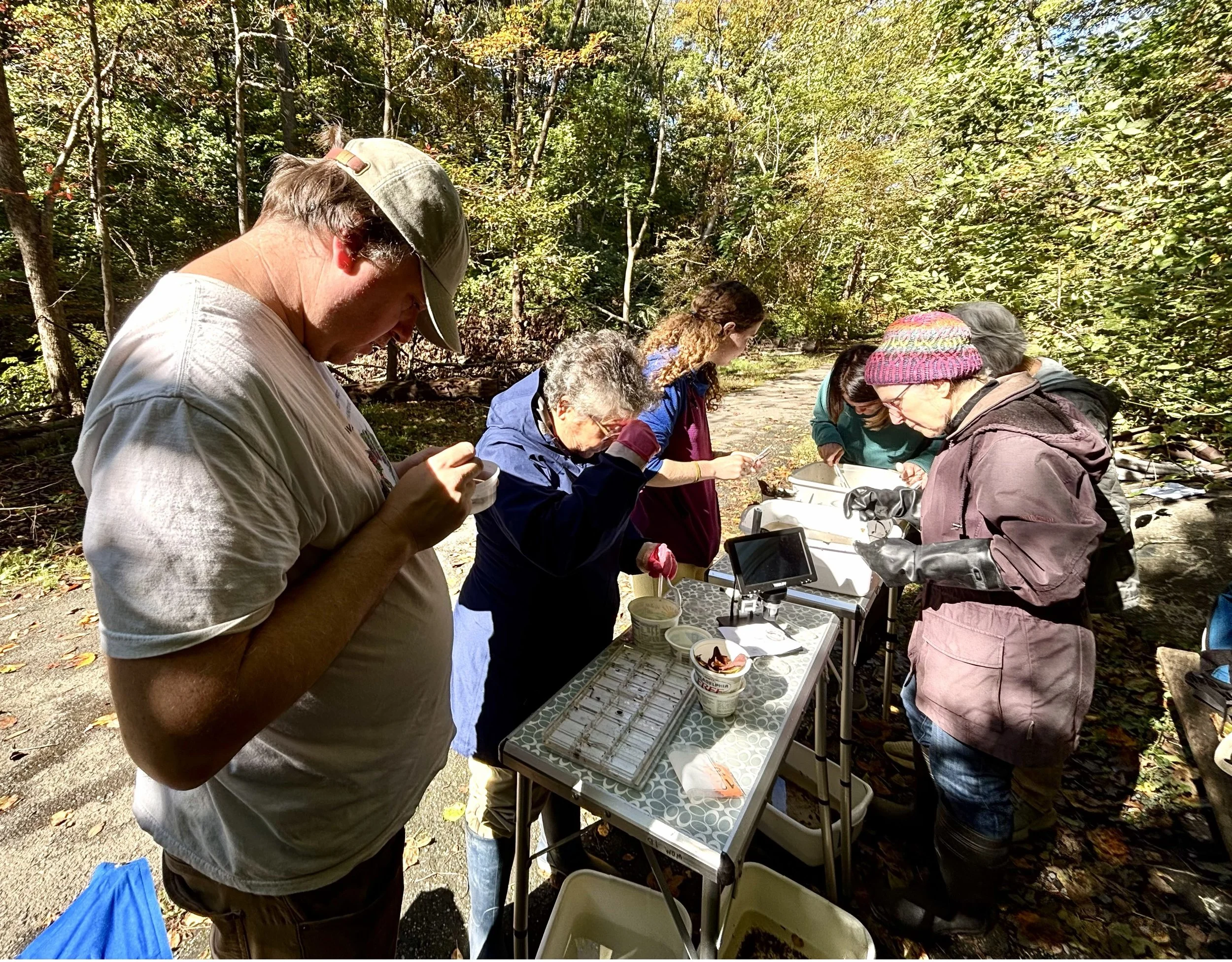
Stream monitors hard at work sorting macroinvertebrates from the Little Falls Branch, Bethesda MD.
notes from our team leader:
Our efficient crew(Emily, Averil, Colette, Sara R and Sally) with the aid of Doug McRae from Nature Forward finished our Fall monitoring in record time yesterday. Although it rained the night before the water was running clear. As you see we found the usual suspects. The picture of (what I believe to be) an early version of a flat leech was interesting.
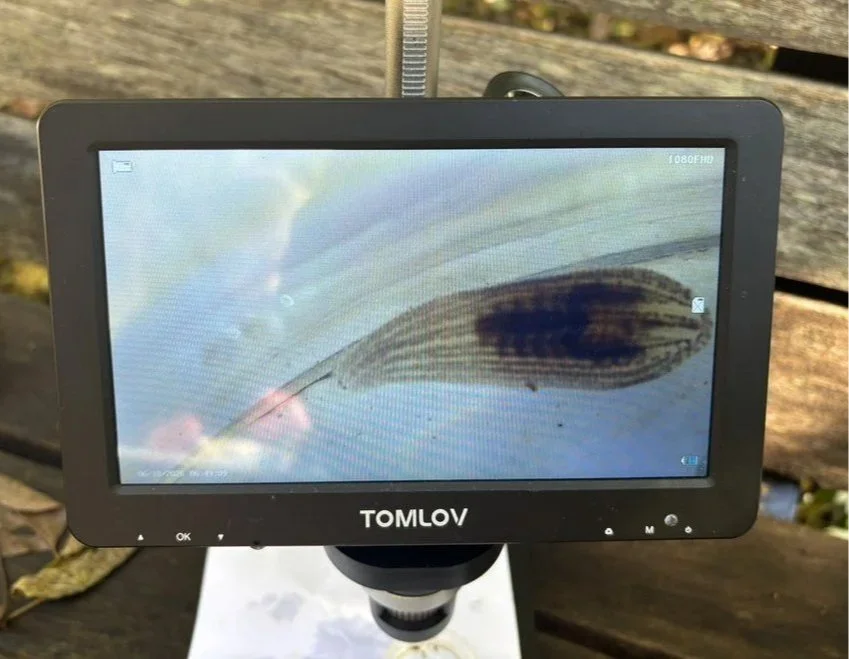
Flat Leech found in the Little Falls Branch at our fall monitoring session. Unlike the cylindrical leeches, these small Helobdellas do not feed on blood.
Cylindrical leeches - 2
Flat leeches - 1
Aquatic worms. 3
Planaria - 34
Asian clam - 1
Scud - 1
Sowbugs - 26
Black fly - 6
Crane fly - Tipula - 2
Common netspinner cadisfly -17
Small minnow mayfly-Baetis -11
~ Frank Sanford
Thank you
Thank you to our monitoring team who comes out sun, or rain or even snow to census the creek. The program is run in partnership with Nature Forward who submits the data to the Maryland Department of Natural Resources. Learn more about our program HERE.