
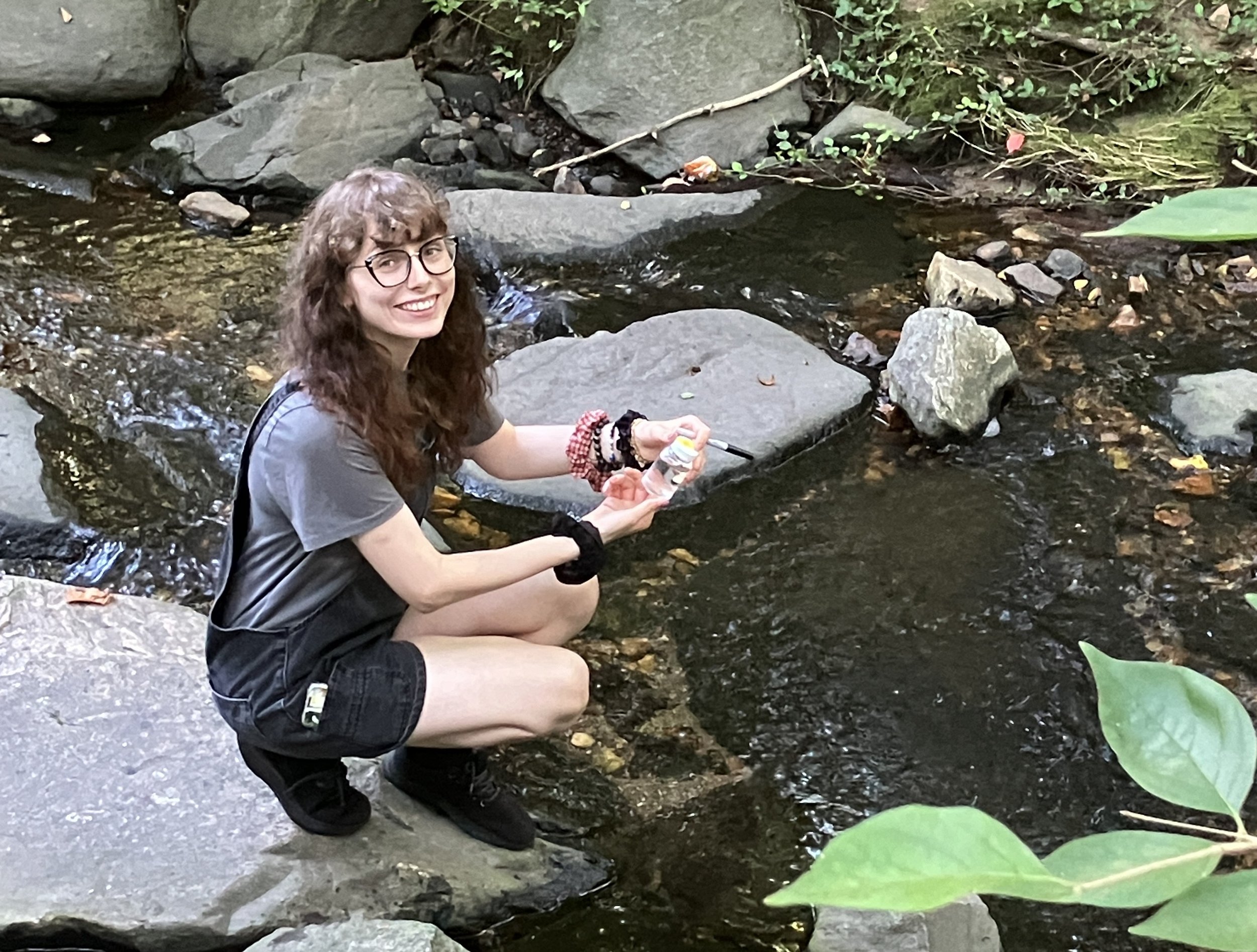
Summer Orledge taking a water sample on the Willett Branch to test for e. coli.
Who doesn’t enjoy a dip in a stream or river on a hot summer day? It’s a great way to cool off in nature – as long as the water is clean and safe for recreation. And that was often the case this summer for some of the Bethesda area’s beloved waterways, including the Little Falls and Minnehaha creeks, and the Potomac River at Sycamore Island.
Over the course of 15 weeks, from June to September, Little Falls Watershed Alliance tested three creeks in the watershed – the Willett Branch, the Little Falls Branch, the Minnehaha creek and one location on the Potomac for E. coli (Escherichia coli) to let people know if the waterways meet Maryland State Standards for safe water play. The results were posted on more than a dozen neighborhood listservs so that residents could decide if they should spend a day at the creek.
The highest bacteria counts occurred in most sampling sites from July 22nd to August 5th. By mid-September, however, bacteria counts at every site except two were below the recommended standards for recreational use, making most of them safe for recreation during the warm days of late summer.
LFWA intern Summer Orledge trained and led a group of volunteers in collecting water samples every Wednesday morning from nine locations: two in Willett Branch, five in Little Falls Branch, one in Minnehaha Branch in the Glen Echo National Park, and one at Sycamore Island on the Potomac River.
The samples were processed at American University in a new partnership with their Environmental Science program headed by Dr. Karen Knee. Orledge, an Environmental Science Master's student at American University, ran the bacteria tests at the university’s environmental science lab with the help of AU undergraduate Noah Bilu.
Good news and bad news
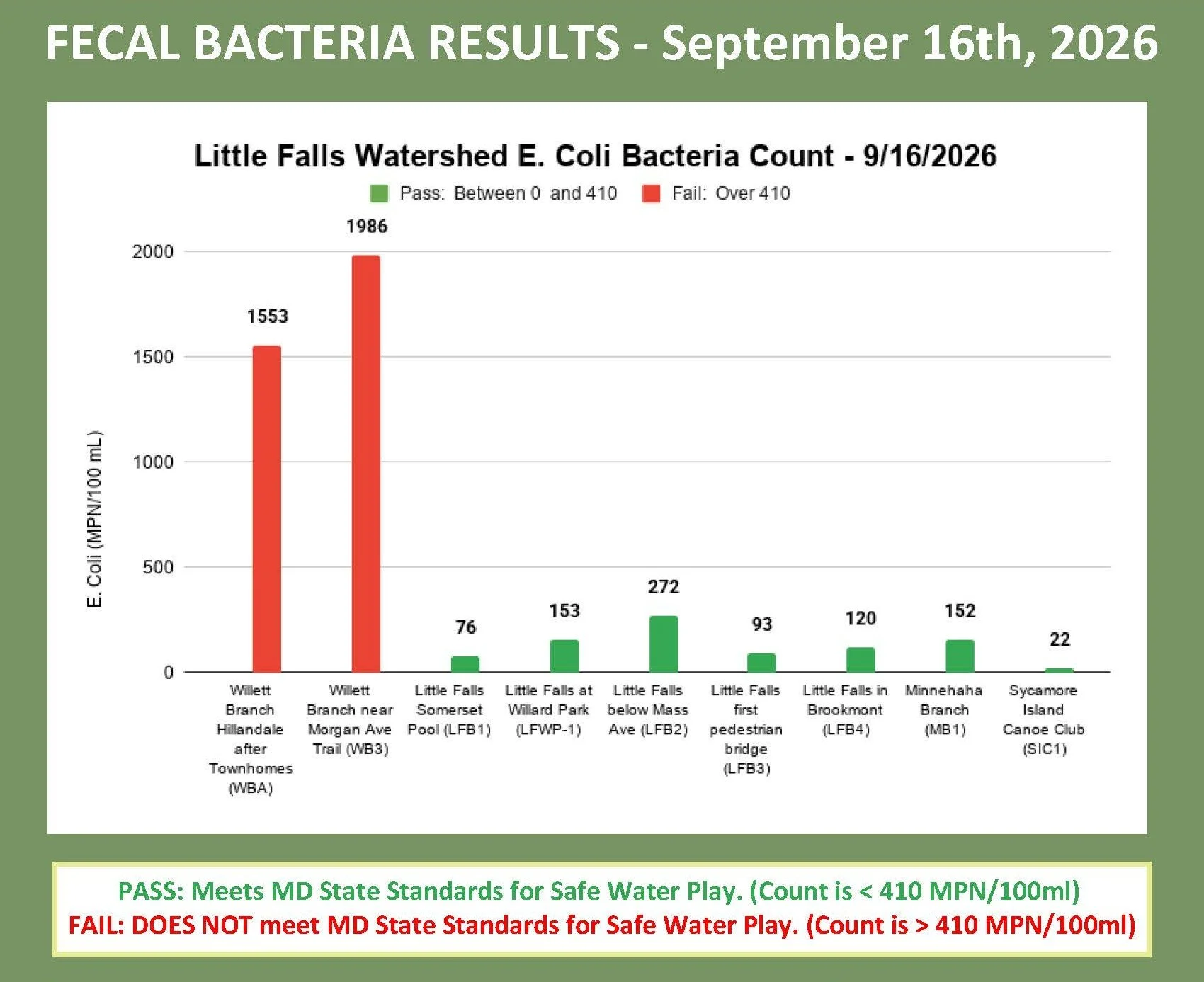
While the season ended with 7 of nine site passing, during the early months of summer, testing results failed to meet the criteria that would make it safe for people to play and swim. This is reflective of patterns from the last five years, and one site stood out as particularly alarming.
“Willett Branch 3 was higher this year than it's ever been,” said Orledge. In 2022, the Little Falls Watershed Alliance’s testing program uncovered a serious fecal pollution problem in the Willet Branch, a creek that runs underground through downtown Bethesda and emerges by the Bethesda Pool near Little Falls Parkway. The source of the pollution was an illicit plumbing hookup at a local hotel, and the problem was addressed in 2024. Yet this year’s testing results reveal continued contamination. Orledge said the reason for this is unclear. “The Maryland state government will be examining it further,” she said, “so fingers crossed.” Tracking down the source takes time as the bacteria could come from dog wastes, wild life droppings, sewer leaks or illicit hookups.
Sycamore Island Site Added
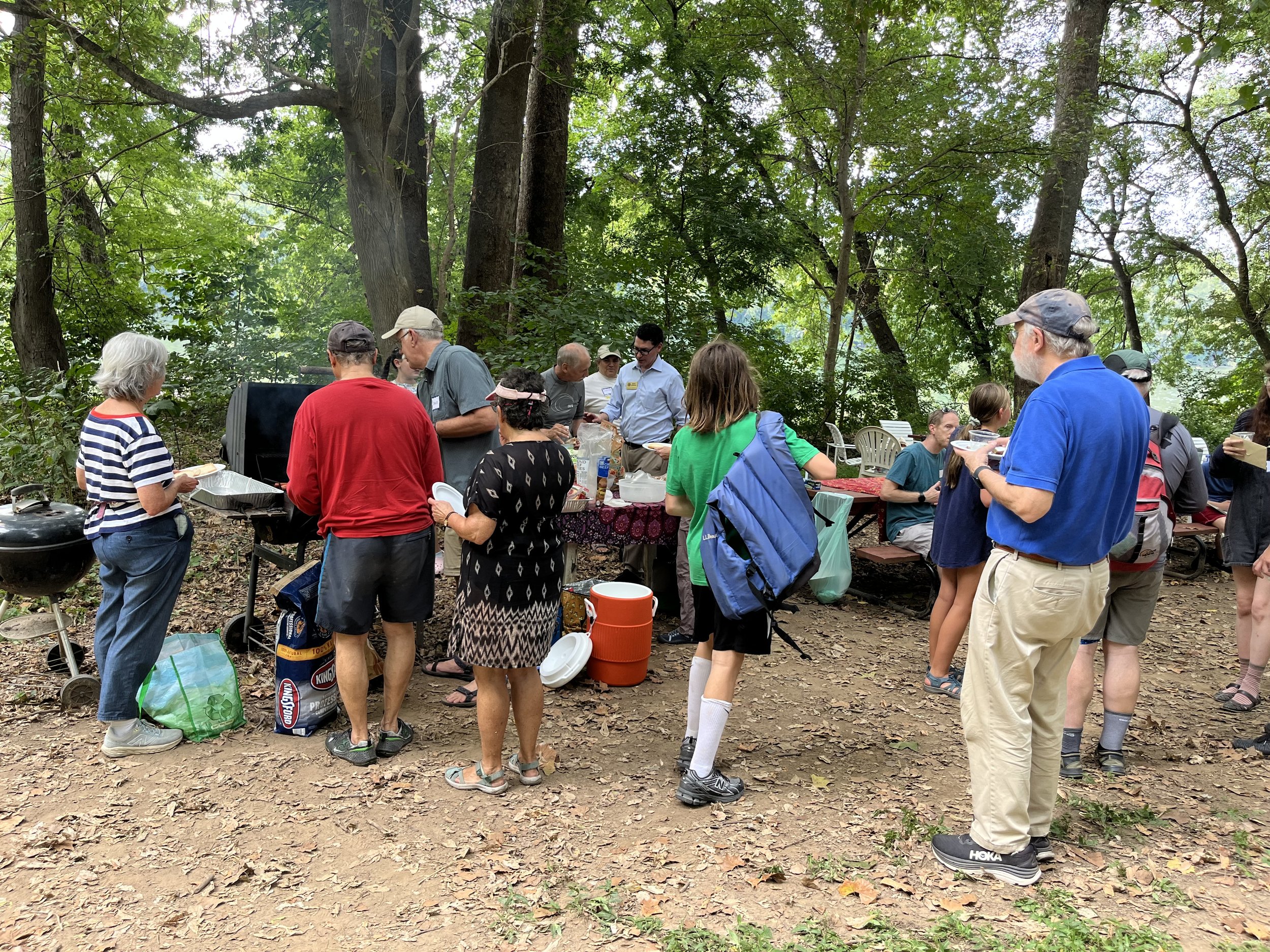
This year, Sycamore Island, a popular spot on the Potomac River for water recreation, was added to the list of testing sites. One surprise was that the site usually met the MD criteria for safe water play. The site’s bacteria levels spiked during rainfall, which is common in rivers because of the waste and debris washed in from storm runoff. But for most of the season the water around Sycamore Island was clean and perfectly safe for swimming. Members of the testing team held their season’s end picnic at the Sycamore Island Canoe club and were able to enjoy a swim.
Fecal bacteria - health threat for humans
Waterways can be deceptive. “Even if a stream lacks trash strewn everywhere, or murky, questionably-colored water, it may still be polluted,” said Orledge. This is because fecal and other bacteria are odorless and invisible to the naked eye. Ingesting polluted water can cause diarrhea or other gastrointestinal symptoms. Open sores can lead to rashes and infections. When the levels are higher than the Maryland State standard, the Little Falls Watershed Alliance advises people to stay out of streams and to wash carefully if they do come in contact with the water.
More information
For a copy of the season’s end report, visit HERE.
Thank you
Our program owes much to the efforts of Woody Stanley, who crunches the numbers, Summer Orledge, and our team of volunteers. Additional thanks to Dr. Karen Knee for lab supervision, and to the Anacostia Riverkeeper (ARK) for providing extra test supplies on short notice. The data was collected by teams of 25 volunteer citizen scientists. These findings would not have been possible without their dedication, stewardship, and effort.