Equity One Releases Concept Drawings for Westbard Sector

This is from

Robest Dyer@BethesdaRow

-

Equity One is showing the first images of its plans for properties it owns in the Westbard Sector of Bethesda, and previewed them at a media event on Wednesday, Feb 4, 2015. This was a somewhat unusual move, to reveal the renderings for reporters instead of at a large community meeting, or pre-submittal public meeting. The firm's Executive VP of Development, Michael Berfield, said he doesn't anticipate having a large meeting like those held last year again, saying that "at some point they become counterproductive." Instead, Berfield said, he is meeting with small groups, such as the Kenwood and Springfield Civic Associations. Click

HERE

for complete story...

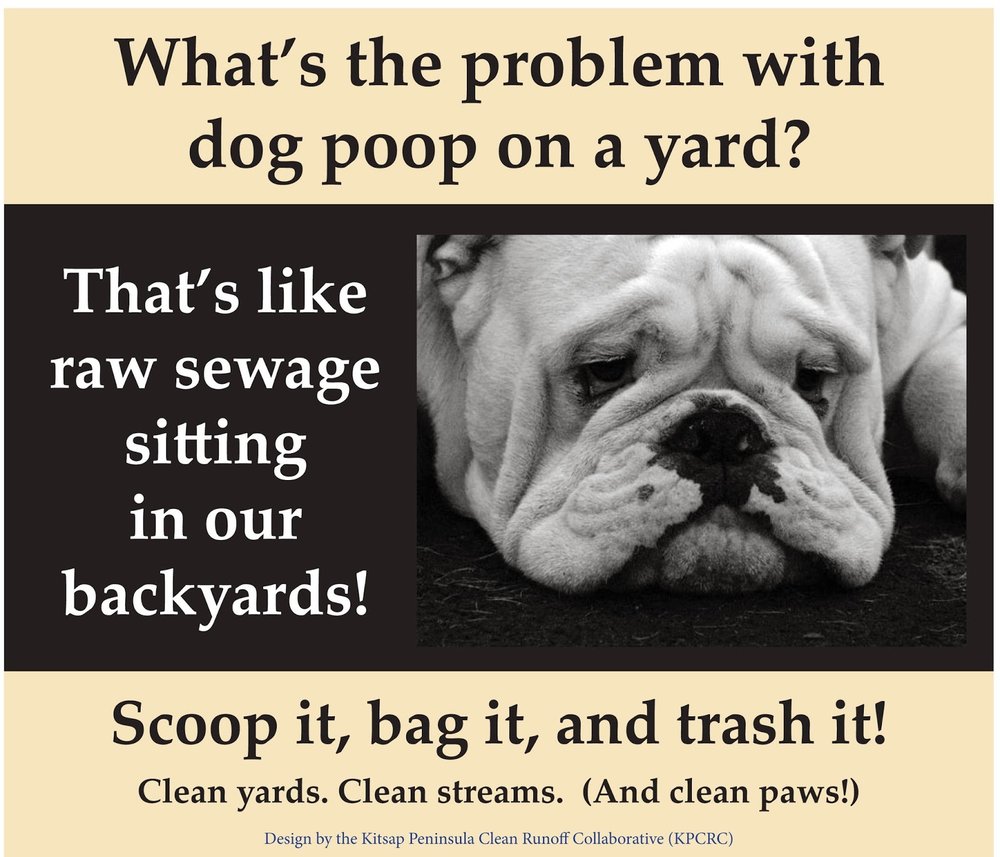
Dog Poop and Fecal Bacteria

  • Did you know that the fecal bacteria count in the Little Falls Branch is dangerously high?

  • Did you know that dog wastes contributes significantly to the count?

  • Did you know that by scoop the poop and disposing of it in your toilet or trash can, you can make a difference!

Dog Poop has been on a lot of people's mind lately!  It seems like snow brings out the worse in us and no one wants to pick it up.  We all know no one wants to step it it, but there are environmental considerations too.  Yes, it is organic and it does break down, but the ground can only absorb so much.  The rest is washed off the yards, out of the woods and into the creek.

The average dog produces almost 300 pounds of poop a year.  That's a lot to step in, but also a lot of pollution.  

According to the NJ Department of Environmental Protection: 

Pet waste contains bacteria and parasites, as well as organic matter and nutrients, notably nitrogen and phosphorous.

Some of the diseases that can be spread from pet waste are:

Campylobacteriosis- a bacterial infection that causes diarrhea in humans.Salmonellosis- the most common bacterial infection transmitted to humans from animals. Symptoms include fever, muscle aches, headache, vomiting, and diarrhea.Toxocarisis- roundworms transmitted from animals to humans. Symptoms include vision loss, rash, fever, or cough.In addition to these diseases, the organic matter and nutrients contained in pet waste can degrade water quality. When pet waste is washed into a surface water body, the waste decays. This process of breaking down the organic matter in the waste uses up dissolved oxygen and releases ammonia. Low oxygen levels, increased ammonia and warm summer water temperatures can kill fish.

Excess phosphorous and nitrogen added to surface waters can lead to cloudy, green water from accelerated algae and weed growth. Decay of this extra organic matter can depress oxygen levels, killing organisms. Objectionable odors can also occur.

You can make a difference for clean water and clean shoes by scooping the poop.

 A simple plastic bag full of poop in the trash, or even better, flushed down your toilet keeps fecal bacteria out of the creek.  

Westbard Sector Planning Meeting, Tuesday

Westbard Sector Plan Public Meeting
Tuesday, September 23, 7:00 to 9:00 pm
Walt Whitman HS Cafeteria
7100 Whittier Blvd., Bethesda.

The Westbard Shopping Center and surrounding properties have been bought by Equity One, with the intent on redeveloping the area. However, before it can be redeveloped, the Sector Plan must be reworked. The last plan for the area was done in 1982 and does not allow for the type of development they are envisioning.

Montgomery County is in the process of developing a new plan for the area. On Tuesday, they will hold the first public meeting. Citizen input into the process is critical. Sector plans are the map for future development. What is on the plan will be the rule until the next plan is developed - usually 20 or 30 years later. So, it's important that they get the plan right!

More information is at the County website - http://montgomeryplanning.org/community/westbard/


Who's that Croaking!

Report from a FrogWatch Volunteer at the Vinton Park Pond

By Jeanette Kreiser


At the Vinton Park Pond, right by the Somerset Town Pool, a lone bullfrog (apparently) calls for a mate while American toads provide a more continuous background din. As part of FrogWatch USA, a national citizen science program of the Association of Zoos and Aquariums to monitor the frog and toad populations across the United States, I have been spending three minutes one night a week for the past several months listening at the pond for the calls of various species of frogs and toads, and some additional minutes recording my findings on the web at the Fieldscope site, http://frogwatch.fieldscope.org.


I have been part of the Montgomery County chapter of the program, conducted under the aegis of the Montgomery County Department of Environmental Protection. After a one-hour classroom session in January and an additional hour of training in the field in early March, supplemented with further online listening sessions at my home to learn the calls of the different species of frogs and toads native to this area, I began my weekly three-minute evening vigils as soon as temperatures were above freezing.


The first weeks were discouraging. There were no sounds at all coming from our pond—even when, in early March, I had just heard a multitude of spring peepers a half-hour earlier at a pond in Rockville where the March training session was conducted. After three very quiet weekly evening sessions at the pond, I was beginning to think that our town was devoid of frogs, and that my frog monitoring was going to be a very uneventful and unproductive effort.


Finally, one afternoon in late April, while taking the cut-through from Friendship Heights to Somerset, I heard my first calls at the Town pond which I identified as those from American toads. The next week, a lone bullfrog added deep bass notes to the toads’ higher trills. Several weeks later, the American toad calls ceased and sounds that resembled the strumming on a comb’s teeth—the call of the upland chorus frog—began, with the bullfrog’s voice continuing its regular deep croak.


Concerned that there seemed to be a lone (and lonely?) bullfrog, I began an e-mail conversation with the Somerset Mayor and some Town Council members, as well as some members of the town’s Environmental Committee, about whether there was a way that the Town might provide some additional bullfrogs in the pond.


But the idea was dropped when we contacted the Montgomery County Department of Environmental Protection, which discouraged the introduction of populations in general, and warned that bullfrogs were known to be very aggressive and would very likely drive out the other species of frogs in the pond environs. Further, it seemed best to leave the frog to his own devices. Rather than lonely, he might well have been most happy to be the sole male, with the likelihood being that there were females, who do not croak, available in the pond area.


My vigil will continue into the summer. I hope that I will be able to report that there are other species of frogs and toads croaking in our pond and woods.

We Won! Little Watershed Group Packs a BIG Punch!

Thank you to all our supporter in yesterday's DoMore24.org fundraising frenzy. We won prizes for the most donors and for the most donations in the Environment and Community Category. That's an extra $5,000 on top of the $3,937 raised.

It just reconfirms the importance of small local groups. We are the only watershed group working directly for the Little Falls creek and our work matters. We pick up trash, we free trees from vines, we restore meadows and other native habitats and we watch out for the creek.

The parks and the creeks are treasures in our densely populated and we are proud to speak for them. Thanks for helping us help the environment.


Have you seen this plant - Leatherleaf Mahonia?

Last week, I led a weed removal work day for folks from the Marriott Corporation.  We worked off of Little Falls Parkway and got a lot done.  (See our

Facebook page

for pictures).  I was working with Frank Sanford, another weed warrior supervisor, and we came across a plant neither of us knew - pretty holly like plant with really flat compound leaves.   Yesterday, with the help of another weed warrior, I IDed it.  It's Leatherleaf Mahonia  and wouldn't you know it - there's an invasive alert out for it from the National Park Service.  It's been identified as a potential threat in Montgomery County and other parts of Maryland.

This just points to why we need to keep focusing on natives.  We never know when a perfectly good landscaping plant will go rogue.  This was the case for non-native bush honeysuckle.  It was a great landscaping plant for some 80 years until the climate changed, or something changed and it escaped into the forest where it has taken over. 

Hopefully we can nip a full scale invasion of Leatherleaf Mahonia in the bud (so to speak).  So much work to do!

A Meadow for Norwood Park!

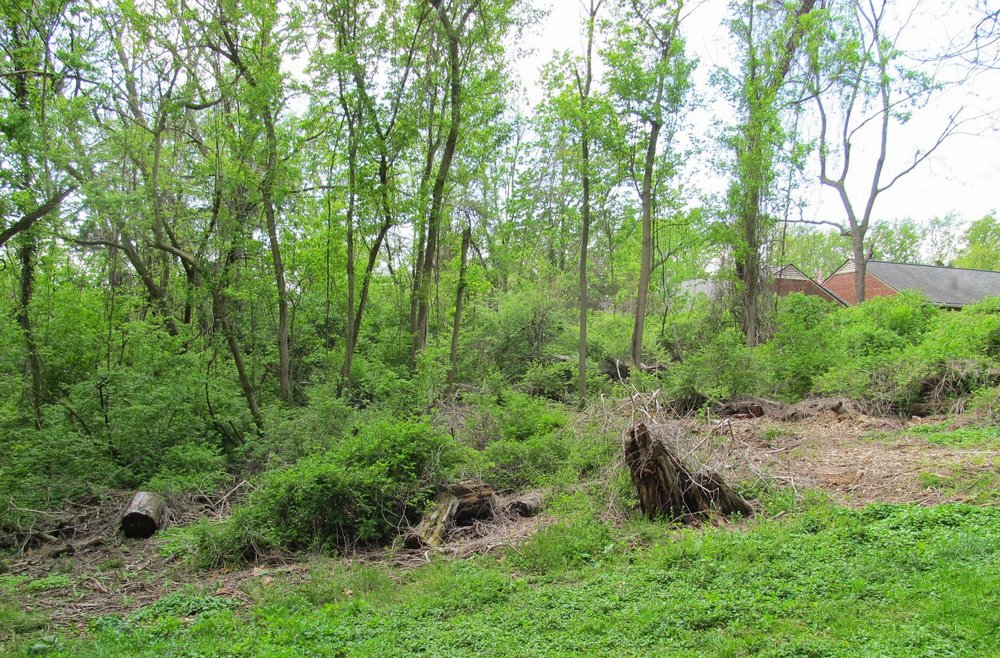
The vines are gone, the bush honeysuckle has been cut back and a meadow is coming to Norwood Park. Little Falls Watershed Alliance is partnering with Montgomery Parks to restore a meadow below the soccer fields at the west end of the park.

Dozens of volunteers have spent 100s of hours cleaning out bush honeysuckle, porcelainberry vines, multi-flora rose and other invasive non-native plants.  All their hard work has paid off  as the debris will be removed, the land tilled and replanted with native flowers and shrubs.

Work will begin in late May or early June to clear the piles of logs and other debris.  Community planting days are planned for the fall and spring of 2015.

Thank you to Whole Foods whose generous donation made this possible.

 A Meadow for Norwood Park:  Imagine all this debris removed and wildflowers blooming in their spot.   Work will start in late May and June with community planting days planned for the fall of 2014 and Spring 2015.

Trash is Gone, the Watershed is Clean!

April 12 was our annual watershed clean-up and it was a beautiful day for getting in the creek and getting the trash out!

The officials numbers are:
37 bags of trash
8 bags of recycling
one shopping cart
one bike
one suitcase
miscellaneous metal pieces and car part
64 volunteers for a total of 161 hours
woo! woo!

We also pulled garlic mustard that day. This invasive weed was just starting to show its head, but we managed to pull 8 bags.

Thank you to everyone who came out and to the Westmoreland Garden Club who partners with us every year taking the lower part of the Little Falls Branch while we take the upper part and the Willett Branch. And thanks to Tim Eden and his son for volunteering the next weekend to finish the job by picking up the creek that runs between Kenwood and the Little Falls Parkway.


Planting for Butterflies

I have been revisiting Doug Tallamy's excellent book Bringing Nature Home when I came across this list of natives to plant to attract butterflies and moths on his website. Doug's book is an exhaustive and inspiring look at natives plants and their place in the food chain. Even if you can only plant two of three of these flowers in your yard, you are creating a habitat that will pay off not only in butterflies and moths, but in song birds and more. Non-natives have no food value for many of our pollinators which then effects the birds that eat the larva of these insects and so on up the food chain.

So, when you're thinking of what to plant this year - take this list with you and see if you can't find some room for some of these lovely flowers in your yard.


Common Name Plant Genus Number of Butterfly/moth species supported
Goldenrod Solidago 115
Asters Aster 112
Sunflower Helianthus 73
Joe pye, Boneset Eupatorium 42
Morning glory Ipomoea 39
Sedges Carex 36
Honeysuckle Lonicera 36
Lupine Lupinus 33
Violets Viola 29
Geraniums Geranium 23
Black-eyed susan Rudbeckia 17
Iris Iris 17
Evening primrose Oenothera 16
Milkweed Asclepias 12
Verbena Verbena 11
Beardtongue Penstemon 8
Phlox Phlox 8
Bee balm Monarda 7
Veronica Veronica 6
Little bluestem Schizachyrium 6
Cardinal flower Lobelia 4


Planting for the Environment

The snow is gone...let's plant! Here are some local and desirable groundcover, shrub and trees to consider:

  • Shady Perrenials: Aster divaricatus, Eastern purple coneflower, joe pye weed, cardinal flower and monarda spp for butterflies, Sedum "autumn joy", Ginger, moss phlox, Christmas fern and bluebells for shady groundcover;

  • Sunny Perrenials: green and gold, golden coneflower and creeping phlox (get the rabbit proof version), foam flower, and sedum 'autumn joy' for sun.

  • Vines - Trumpet honeysuckle for climbing floral.

  • Shrubs - Witchhazel, spice bush, blueberry and cherry bush.

  • Trees - Paw Paw, red bud, arborvitae (evergreen).


These plants are beautiful, and local to the area, so they are more durable than non-native plants. They are diverse in texture and character, and low maintenance. The added benefit of these plants is that they don't attract rodents and rabbits for housing (like ivy and liriope), they don't change the soil constitution (like bush honeysuckle), and by buying local, you are contributing to our native habitat: if birds deliver the seeds from your plants to our local parks, it fosters native growth. For a wallet sized guide of recommended landscape plants, contact us at info@LFWA.org and we'll put one in the mail to you or click HERE and we have lists online.

Other Plant News:
Dinner and a Show (of sorts)
Montgomery Parks Weed Warrior Training
April 28, 5:30 to 7:30
Norwood Park, Chevy Chase, MD
Click HERE for complete information and registration instructions.
Have you ever wished you could tell the native plants and trees from the invasive ones in the Park? Join us, and get to know the difference! Dinner will be served. If you attend only one certification training this year, let it be this one.

45 New Trees and Shrubs!
What graces the Massachusetts Avenue entrance to Little Falls Park as of 3/15, thanks to the State Highway Administration (SHA). SHA removed bamboo, bush honeysuckle, privet and vines that were making their way into the Park, and installed fir, holly, red bud, service berry, and viburnum. Thank you, SHA, for being Park Stewards.

Little Falls Park Restoration
The Park's third deer exclosure is one month old, installed by volunteers. The plan is to restore all three exclosure areas to native habitat. Many remember when the Park was full of Virginia Bluebells, song birds and butterflies. If you want to help Park restoration efforts:

  • plant native plants in your yard that birds, bees and butterflies love, and remove plants that invade the Park (most via birds) and crowd out natives, such as ivy, winter creeper, bush honeysuckle, bamboo, privet, multiflora rose, mile a minute, and wineberry;

  • reduce the noise of lawn care in order to create a desirable habitat for native mammals, reptiles, amphibians, birds, butterflies;

  • trap rainwater in your yard (and get paid by the County to do it) to allow native aquatic life to survive in Little Falls Valley Stream;

  • contact lfwa.org, "events" tab to participate in weed pulls, or contact lfwa.org to lead Park tours, give native plant talks, lead weed pulls, remove trash from Little Falls Stream;

  • subscribe to the monthly e-letter at lfwa.org, the Park and stormwater management stewards of Little Falls Park, in order to stay informed. lfwa.org has information on everything mentioned above.


Park history documentation
Do you have photos of what the park looked like 25 or more years ago? Make copies and send them to us, or better yet, scan them and send a digital copy.

Spice bush is getting ready to bloom, so come enjoy the Park's beauty!
Little Falls Watershed Alliance (lfwa.org)