
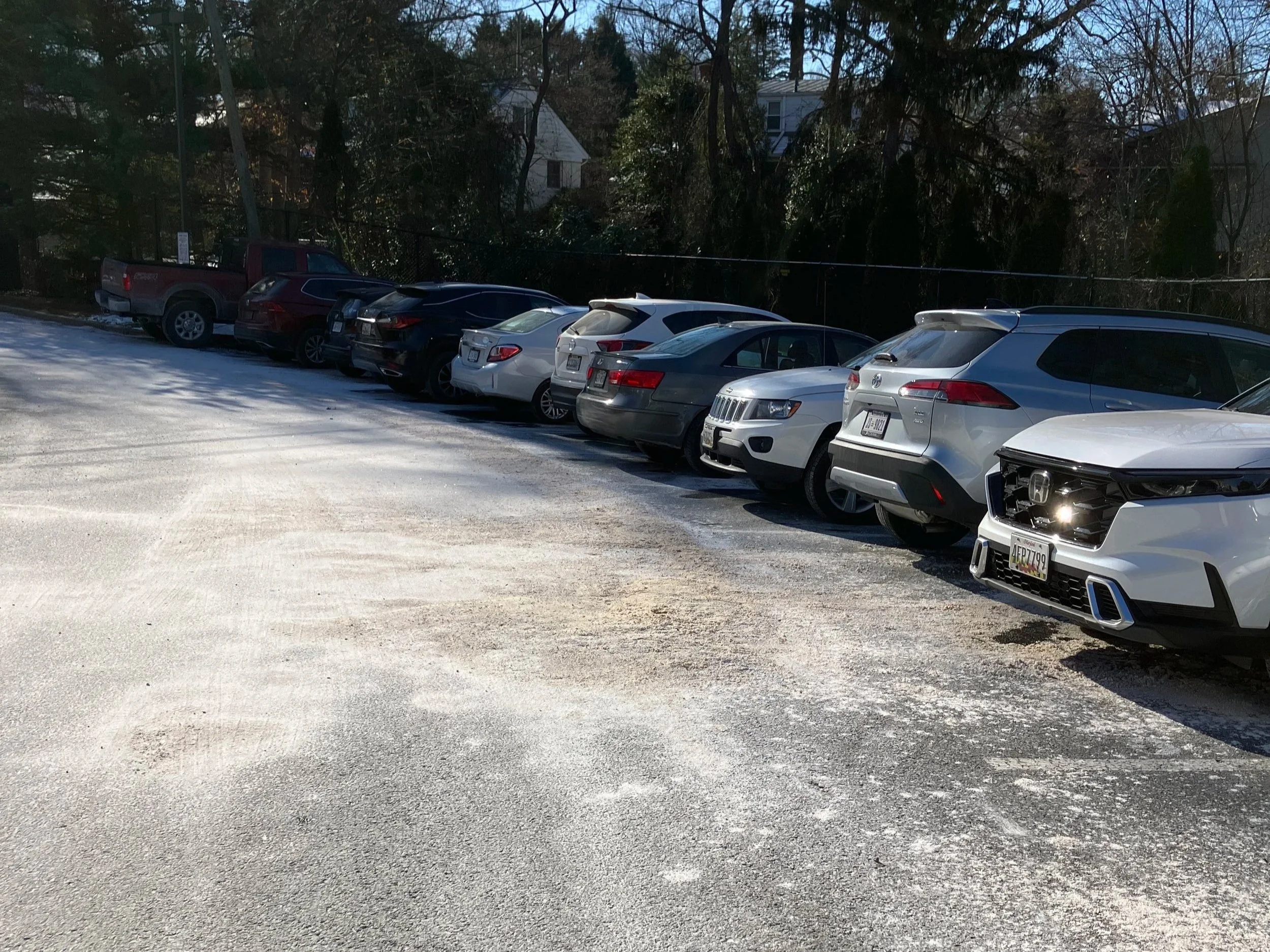
Salt spill at Westbrook Elementary School parking lot, December 16, two days after the snow storm on December 14.
Every year Little Falls Watershed Alliance joins with the Izaak Walton Salt Watch program to test the effect of road salt on our local creeks. www.LFWA.org/salt-testing. Road salt makes the roads safer, but too much salt ends up in the creek and kills the freshwater organisms who call the creeks their home. We test the salt levels of the water at 11 sites on four creeks before and after storms to see if there is a difference and how much.
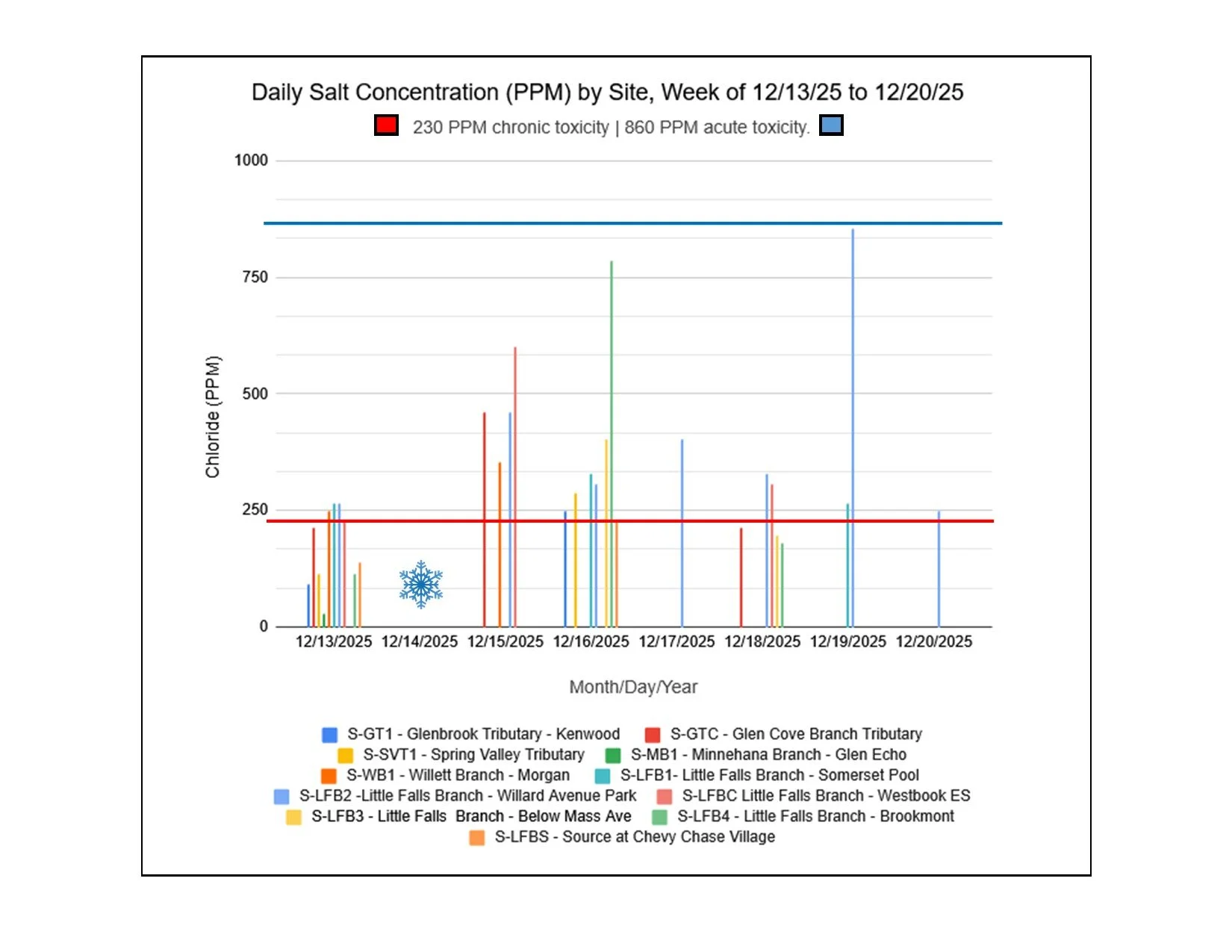
Yes, there is a huge difference - in fact, all of our testing sites saw the salt levels rise above the "chronic toxicity" level for freshwater organisms. Our first test date was Dec 13 and on Dec 14 it snowed. Some of the sites were tested again over the course of the next 7 days. What we found was that all the sites experienced severe pollution right after the storm and that high levels persisted for many days.
You can help prevent road salt pollution by:
1) Using less salt - 12 ounces (one coffee cup full) will do 250 square feet - that's an average driveway or 10 sidewalk squares. I know they sell salt in 10 pound bags, but more is not better. Share the bag with your neighbors.
2) Reporting salt spills. In Montgomery County call 311 and ask them to send someone out to clean up. If they don't, call again! The County sent someone out to clean-up a spill at Westbrook Elementary School after we reported it.
3) Sweeping up excess salt where you see it. One person I know regularly sweeps up piles of salt and reuses it. Of course, someone reported sweeping up 70 pounds last year, so that's a lot to reuse. You might have to bag it carefully and throw it out.
Excess road salt also has implications for human health. It's getting into our drinking water and raising the sodium levels. More information about how it affects humans is at WSSC website - https://www.wsscwater.com/saltwise WSSC is quite concerned that the levels are rising.
More information on our salt watch program is at https://www.lfwa.org/salt-testing
Thank you to our salt testing team for this data.